
Why Pipeline Integrity Cannot Be Managed Only Through ILI and Leak Detection
In-line inspection (ILI) tools and leak detection systems are often perceived as the backbone of pipeline integrity management. Many operators assume that as long as pipelines are regularly inspected and equipped with leak detection, integrity risks are adequately controlled.
Industry experience shows the opposite: a significant number of pipeline failures occur in systems that were inspected and monitored. The issue is not the lack of technology, but the misconception that inspection and detection alone are sufficient to manage integrity.
This article explains why pipeline integrity cannot be reduced to ILI and leak detection, and why integrity management must be approached as a broader, risk-based process.
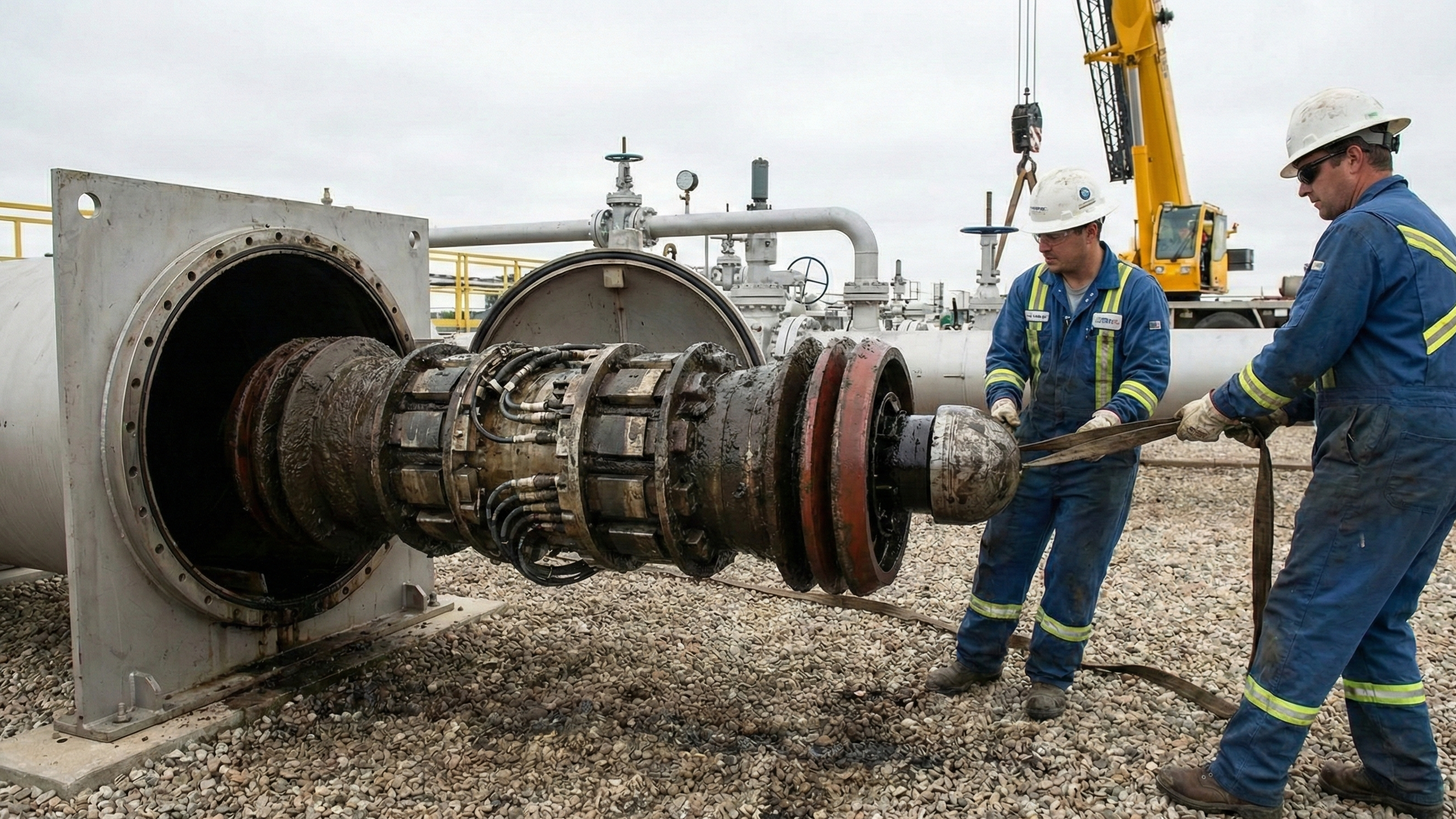
ILI provides condition data, not integrity assurance
ILI tools are designed to detect and size defects at a given point in time. They provide valuable information on wall thickness, corrosion features, or cracking, depending on the technology used.
However, ILI does not:
Predict how fast degradation will evolve,
Capture transient operating conditions,
Identify future integrity threats created by operational changes.
ILI results must therefore be interpreted within a broader engineering and operational context. Treating ILI as an integrity guarantee creates false confidence.
Leak detection identifies failures after loss of containment
Leak detection systems play a critical safety role, but they operate after integrity has already been lost.
Even the most advanced systems:
Do not prevent corrosion, erosion, or cracking,
Have detection thresholds that may allow small but critical leaks to persist,
Are sensitive to operating noise and transient conditions.
Leak detection reduces consequences; it does not manage degradation mechanisms.
Degradation occurs between inspections
Corrosion, erosion-corrosion, and cracking do not progress linearly. Changes in flow regime, water cut, temperature, or fluid composition can cause rapid acceleration of damage between inspection campaigns.
Pipelines that appear healthy during one ILI run may develop critical defects well before the next inspection interval if operating conditions change.
This is particularly true for:
Mature fields experiencing water breakthrough,
Multiphase pipelines with unstable flow,
Lines operating near erosion or corrosion thresholds.
Not all pipelines are inspectable
A large portion of oil and gas pipelines cannot be inspected using conventional ILI tools due to:
Small diameters,
Complex geometry,
Dead legs or short segments,
Low or highly variable flow rates.
Relying on ILI as the primary integrity barrier inherently leaves part of the system unmanaged.
Inspection data without engineering interpretation is ineffective
ILI reports contain measurements, classifications, and confidence levels, but they do not make integrity decisions.
Engineering assessment is required to:
Identify dominant degradation mechanisms,
Assess remaining life and defect criticality,
Define mitigation and operational constraints.
Without this step, inspection data remains descriptive rather than actionable.
Integrity management must anticipate, not react
Effective pipeline integrity management is forward-looking. It aims to anticipate:
How operating conditions may evolve,
Which degradation mechanisms may emerge,
When current safeguards may become ineffective.
ILI and leak detection are reactive tools. Integrity management must be predictive and preventive.
Integrating ILI and leak detection into a PIMS
ILI and leak detection are essential components of a Pipeline Integrity Management System, but only when integrated with:
Risk assessment,
Operating data analysis,
Corrosion and erosion modeling,
Management of Change (MOC),
Defined integrity decision processes.
Used in isolation, they provide information. Integrated, they support integrity decisions.
Conclusion
Pipeline integrity cannot be managed through inspection and leak detection alone. These tools are necessary but insufficient.
Pipelines fail not because ILI or leak detection are missing, but because integrity management stops at detection instead of addressing degradation mechanisms and their evolution.
Effective integrity management requires integrating inspection and detection into a broader engineering and operational framework.