
Why Acquired Pipelines Represent a Major Integrity Risk
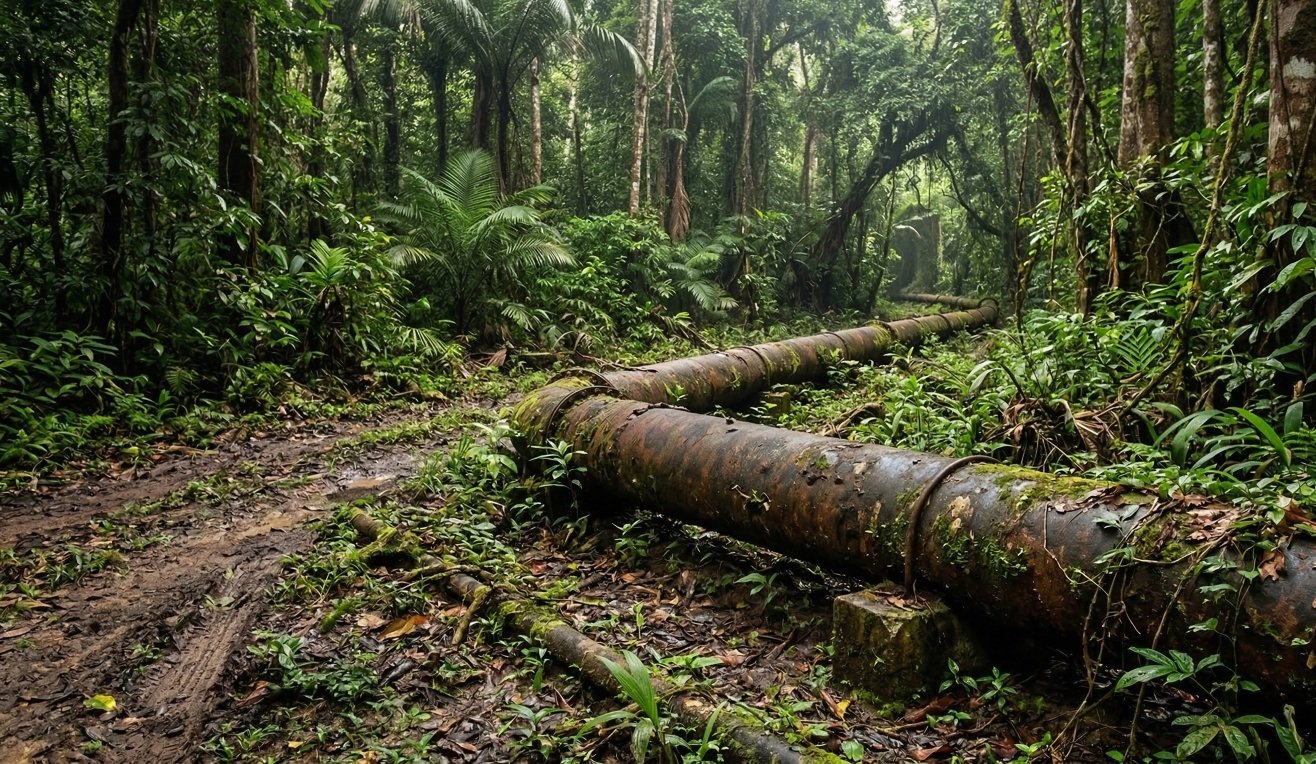
an old pipeline… is it fit for service?
Acquiring existing pipelines is common in oil and gas operations, whether through asset transfers, field divestments, or mergers. These pipelines are often assumed to be fit for service because they are already in operation. This assumption is one of the most common and most dangerous integrity misconceptions.
Industry experience shows that acquired pipelines represent a disproportionately high integrity risk, particularly in the early years following acquisition. This article explains why acquired pipelines are inherently risky and how integrity management must adapt when taking over existing assets.
A pipeline in operation is not necessarily fit for continued operation. Many acquired pipelines operate under legacy conditions that differ significantly from those originally assumed during design.
Standards such as API RP 1160 explicitly require operators to verify integrity assumptions when system conditions or responsibilities change, including after asset transfers. Continued operation without reassessment creates blind integrity exposure.
One of the main challenges with acquired pipelines is data quality. Typical issues include:
missing or inconsistent inspection records,
undocumented repairs or modifications,
unclear corrosion and mitigation history,
lack of traceability on materials and welding.
Without reliable historical data, integrity decisions are based on assumptions rather than evidence, an approach incompatible with risk-based integrity management.
After acquisition, pipelines often experience: new production profiles, different fluid compositions, revised operating envelopes, changes in pigging or chemical treatment philosophy. According to API RP 1160, changes in operating conditions must trigger integrity reassessment. When this does not occur, corrosion and degradation mechanisms can evolve unnoticed.
Acquired pipelines frequently contain hidden threats such as:
corrosion under deposits or insulation,
unreported integrity incidents,
aging coatings or cathodic protection systems,
dead legs and temporary bypasses that became permanent.
These threats are rarely visible through documentation review alone and require proactive validation.
During asset transfers, integrity responsibilities may be fragmented between: previous and new operators, upstream, midstream, and downstream teams, operations and maintenance functions. ISO 55001 emphasizes the need for clear asset ownership, accountability, and governance. Without this clarity, integrity risks accumulate at organizational interfaces.
Early integrity validation is essential! A structured post-acquisition integrity validation should include:
definition of system limits and interfaces,
review of available documentation and data gaps,
targeted inspections and monitoring,
reassessment of degradation mechanisms and fitness for service.
Standards such as DNV-RP-F116 highlight the importance of integrity reassessment following changes in system ownership or operating context, particularly for complex pipeline systems.
Many integrity failures in acquired pipelines occur not immediately after takeover, but months or years later, once new operating conditions have had time to impact degradation mechanisms. Delaying integrity reassessment transfers unknown risk into day-to-day operations, often without the organization realizing it.
Acquired pipelines are not inherently unsafe, but they are inherently uncertain. Pipelines fail not because they were acquired, but because their integrity was never revalidated under new ownership and operating conditions. Treating post-acquisition integrity validation as a priority is one of the most effective risk-reduction measures an operator can implement.